


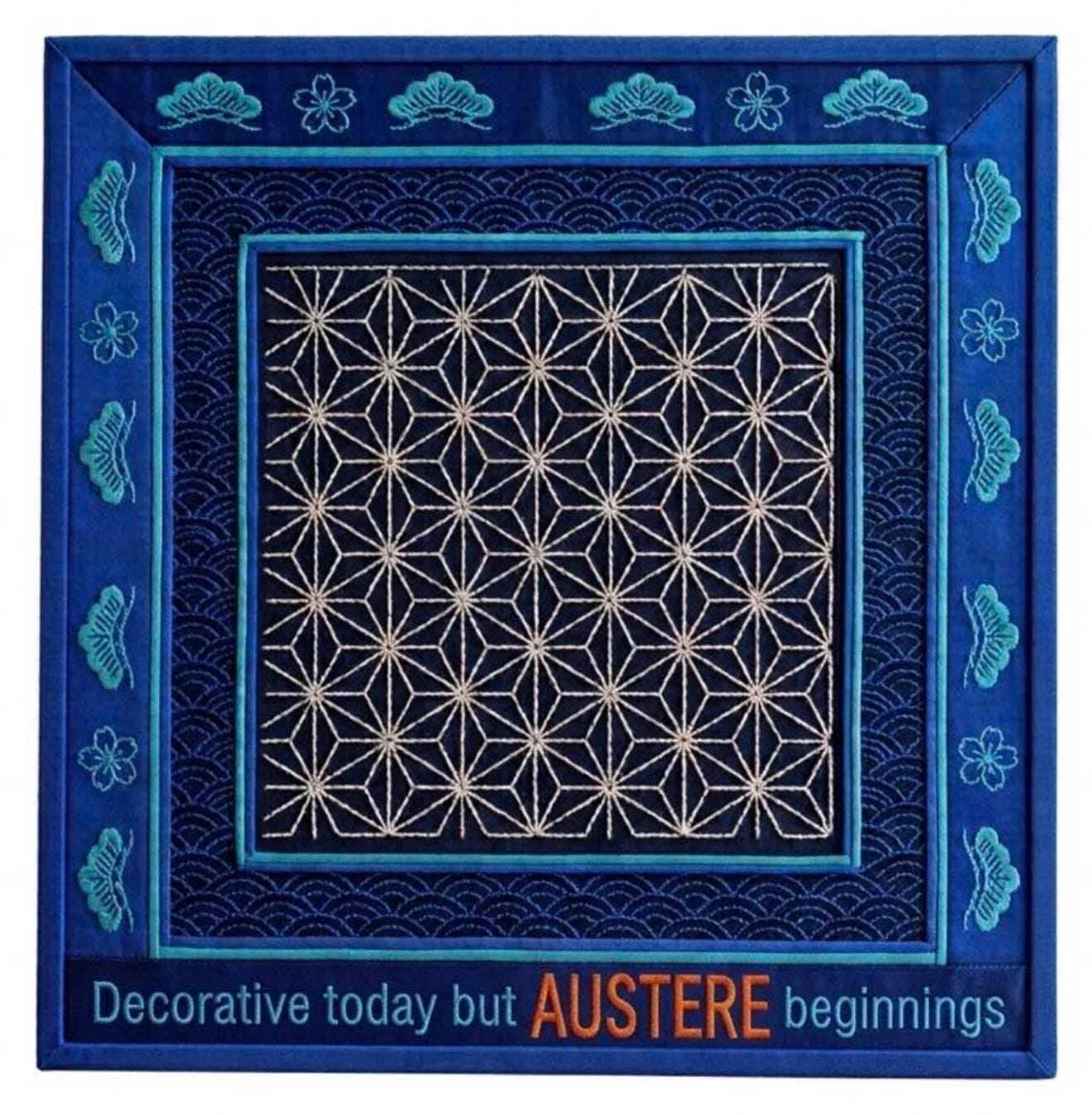
AUSTERITY has three very distinctive meanings. In economics it refers to actions taken by governments to reduce budget deficits. In personal life it describes living with few luxuries. In fashion it describes a plain, unadorned style of clothing.
A recent SAT vocabulary in context question focused on AUSTERITY as a way to describe a traditional form of Japanese embroidery. Take a close look at today’s picture. It features a highly decorative contemporary example of Japanese sashiko embroidery. As noted in the SAT passage, sashiko was not always so ornamental. It actually began as a very AUSTERE or plain and unadorned way to mend working-class clothing.
AUSTERITY and APUSH: AUSTERITY is an apt way to describe early Puritan and Quaker clothing. Both groups used their clothing to visually reflect their beliefs. Puritan fashion focused on restraint, rejecting the extravagant lace, ribbons, and gold embroidery worn by members of the English upper class. Quakers believed that keeping up with changing fashions was a form of vanity that distracted from God. Their plain clothes eliminated all unnecessary decorations.
AUSTERITY – a plain, unadorned style of decoration