


The post-World War II economic boom did not encourage a renewal of women’s rights activism. Instead, magazines, movies, and television programs glamorized romantic love and celebrated marriage. Encouraged by the mass media, men and women married at an early age. During the 1950s the average age of marriage for American women dropped to just 20.3. By 1960, almost 75 percent of all women between the ages of 20 and 24 were married.
The marriage boom triggered a postwar baby boom. The 1950s witnessed a tidal wave of 40 million births. These children formed the nucleus of a huge baby boom generation that totaled 76 million births from 1946 through 1964.
A Revived Cult of Domesticity
The young families populated suburbs that quickly became havens for a revived cult of domesticity. The mass media reinforced and idealized the traditional gender roles in which men commuted to work while women stayed home and raised their children. For example, in the popular TV program Leave it to Beaver, June Cleaver is a middle-class housewife devoted to her family. When her two boys arrive home from school, June greets them with milk and cookies while she prepares dinner in her spotless kitchen. A special issue of Life magazine featured “happy homemakers” like June Cleaver who were dedicated to their husbands and children.
Betty Friedan: “Is this all?”
The “happy homemakers featured in Life magazine did not include Betty Friedan. A middle-class mother of three, Friedan discovered that many of her college-educated peers felt unfulfilled by the endless routines of housework and raising children. Although they lived in comfortable suburbs, these women felt bored and dissatisfied with their lives.
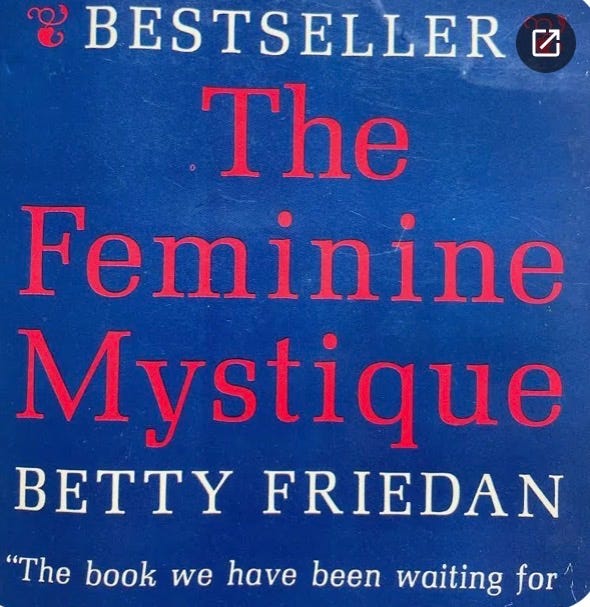
Friedan expressed this sense of frustration in her book The Feminine Mystique. Published in 1963, The Feminine Mystique challenged the culture of domesticity that had prevailed since the end of World War II. It exposed the previously unspoken sense of dissatisfaction felt by suburban housewives who spent their days buying groceries, cooking meals, and chauffeuring their children. Friedan opened her book by describing these routines and then asking a “silent question” that women had been afraid to ask – “Is this all?”
The Feminine Mystique became an instant best seller. It inspired many readers to reevaluate the belief that women should derive fulfillment exclusively through domesticity Historians credit The Feminine Mystique with launching a second wave of feminine activism.
The National Organization for Women (NOW)
Betty Friedan understood “that it was not enough to write a book…there had to be organization and there had to be a movement.” In 1966, Friedan and other women activists formed the National Organization for Women (NOW) “to bring women into full participation in the mainstream of American society now.”
NOW injected new energy into the long-dormant women’s movement. Led by Friedan, NOW focused on working within the political system to achieve an ambitious agenda of equal rights for women that included ending male only colleges, demanding equal pay for equal work, and calling upon companies to provide affordable childcare.
So why should you remember Betty Friedan and the origins of second wave feminism? DBQ and LEQ questions have devoted particular attention to civil rights activism from 1940 to 1980. Betty Friedan played a significant role in the women’s rights movement during this period. The Feminist Mystique and NOW can both be used as evidence for arguments evaluating the causes and consequences of movements for social change during the 1960s and 1970s.