


Feminist leaders hoped that winning the suffrage would enable them to promote an agenda that included child and women’s labor laws, health and safety legislation, and municipal reform. However, they were unable to sustain the prewar enthusiasm for Progressive reforms.
World War I dealt a shattering blow to the confident Progressive belief that progress was inevitable. Instead of reform, American voters elected a Republican president who promised a return to “normalcy.” At the same time, America’s popular culture enthusiastically embraced consumer products and a new carefree lifestyle that became known as the Roaring Twenties. “The uncertainties of 1919 were over,” F. Scott Fitzgerald definitively observed. “ He then correctly predicted, “America was going on the greatest, gaudiest spree in history.”
A New Generation of Flappers
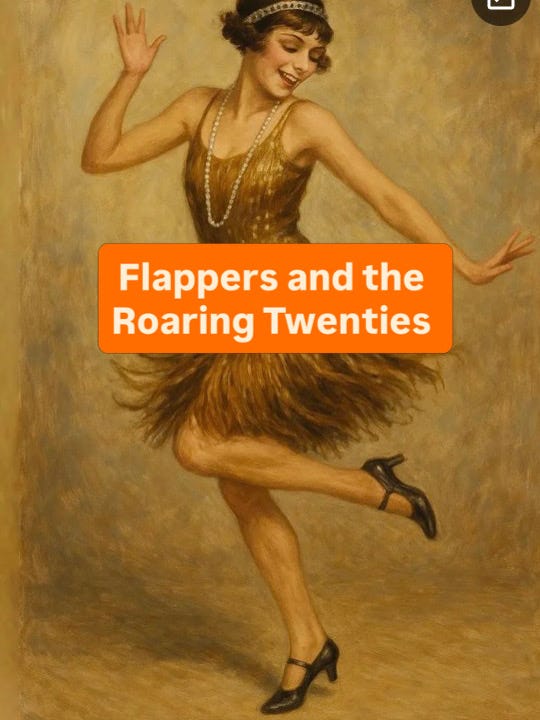
A new generation of young women called flappers provided the most publicized and controversial model of the new American woman. The name derived from the way fashionable young women allowed their galoshes to “flap” about their ankles.
Flappers ignored the feminist political agenda, choosing instead to focus on a lighthearted and flamboyant lifestyle. They unceremoniously discarded the ankles-to-neck layers of clothing worn by the older generation in favor of hemlines rising to their knees. The flapper look also included close-cut bobbed hair and heavy makeup. They further jolted their conservative elders by dancing the Charleston, joyriding in their boyfriends’ roadsters, smoking once-forbidden cigarettes, and drinking illegal liquor.
“Living in a different world”
The flapper’s daring clothing style, scandalous dances, and late-night parties inevitably drew condemnation from many members of the older generation. In 1922, a 19-year-old self-proclaimed flapper named Ellen Welles Page published a widely read essay defending the flapper lifestyle. Page argued that the flappers were a product of a post-war world that had seen too much tragedy to remain “stuffy.” She reminded adults that “we are the same girls that you were – only we are living in a different world.”
Page was right. A combination of labor-saving home inventions and mass marketing on radio was offering young women greater freedom and a dazzling array of new career opportunities. Page pleaded with parents to offer guidance rather than criticism as her generation struggled to navigate its way thru a “brave new world,”
“Ain’t we got fun?”
Flappers marked the appearance of America’s first distinctive youth culture. Magazines publicized the flapper’s willingness to experience new freedoms at the same time the growing movie industry glamorized high-spirited flappers such as Clara Bow, Hollywood’s first “It” girl.
Critics correctly predicted that the flapper phenomenon would prove to be fleeting. But America’s young people didn’t care. They went right on enjoying their happy carefree lifestyle singing, “In the meantime, in between time, ain’t we got fun?”
So why should you remember the flappers? Cultural historians and APUSH test writers do not view flappers as a frivolous topic. Answers to recent SAQs and multiple-choice questions have emphasized that flappers signaled the beginning of a new and more active role for American women. Their youthful exuberance provided a model of independence that would inspire future generation of even more rebellious youth.