


The aftermath of the Civil War ushered in a period of great uncertainty. The defeated and embittered Southern states faced difficult questions about the future place of over 4 million freedmen.
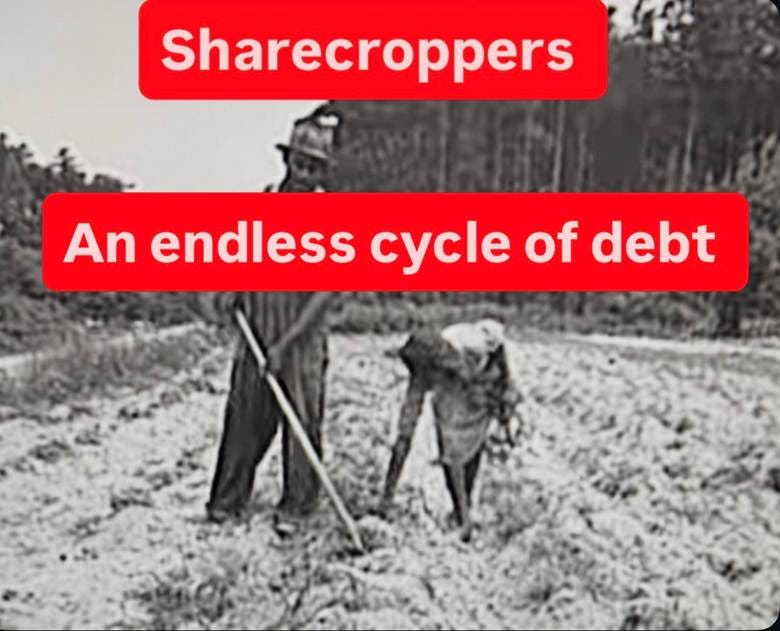
During the 1870s and 1880s, cotton and tobacco planters and Black freedmen created a new labor system called SHARECROPPING. Under this system, Blacks (and some whites) exchanged their labor for the use of a planter’s land, tools, and seed. The croppers then gave the landowner about half of each year’s crop as payment for using his property.
Sharecropping did not lead to economic independence. Unscrupulous landowners and shopkeepers charged sharecroppers exorbitant prices and unfair interest rates. An Arkansas sharecropper recalled, “We couldn’t make nothing, just overalls and something to eat.” He warned, “A man that didn’t know how to count would always lose…They didn’t give no itemized statement. No, you just had to take their word.”
So why should you remember sharecropping? APUSH test writers will not ask you to define sharecropping. But they will expect you to understand how entrenched racist attitudes contributed to the emergence of sharecropping as the dominant labor system in the South. Sharecropping perpetuated the antebellum South’s social hierarchy and system of economic dependency by trapping sharecroppers in an endless cycle of debt and poverty.