


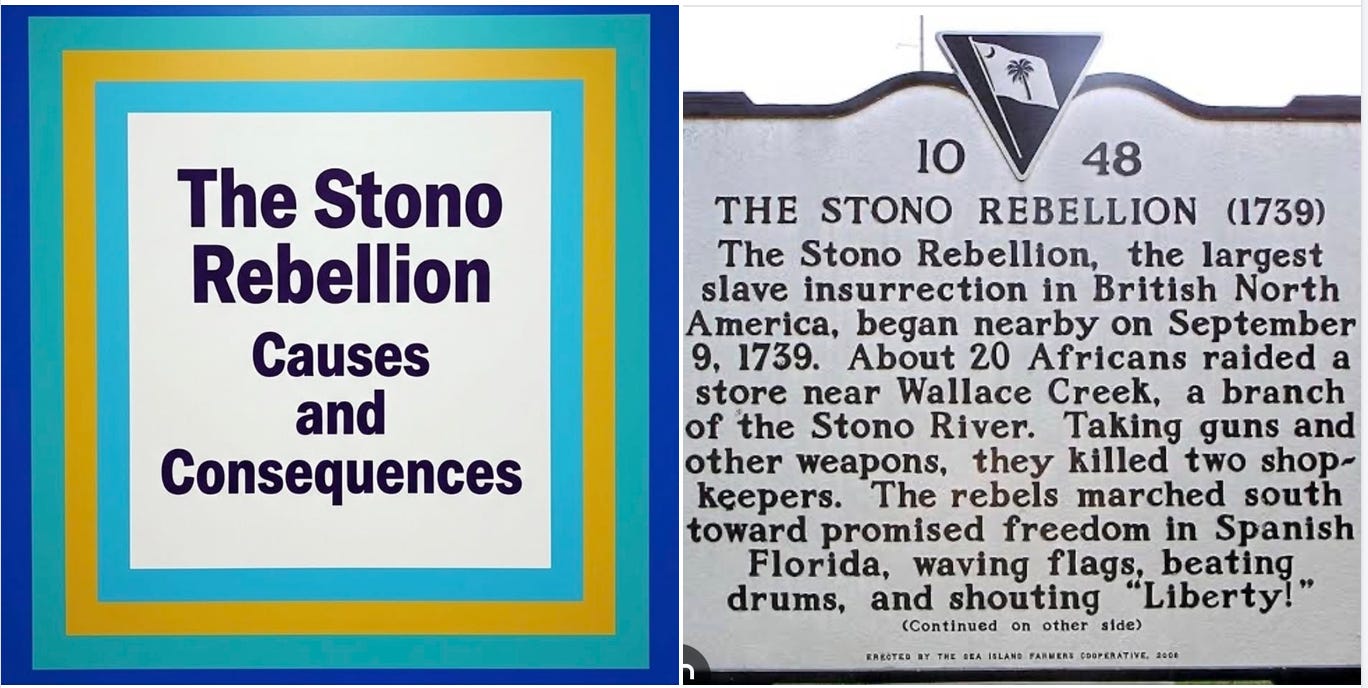
Highway 17 is a very busy road that extends south of Charleston, South Carolina. Many tourists use the road to travel to the beautiful beaches along the coast. Very few notice a roadside historic marker noting the nearby location of the 1739 Stono Rebellion, the largest slave insurrection in British North America.
Causes of the rebellion
The immediate cause of the Stono Rebellion lay in the demographic imbalance between white South Carolina planters and their enslaved African workers. Fueled by the lucrative export of rice and indigo crops, planters imported vast numbers of West Africans throughout the early eighteenth century. By 1739, enslaved Africans outnumbered white colonists in South Carolina by a margin of two to one.
An ongoing rivalry with Spain provided a spark that ignited the rebellion. Seeking to destabilize British colonial enterprises in the southeastern colonies, Spanish authorities in Florida issued a decree offering freedom to any enslaved person fleeing British territory. The promise of sanctuary in St. Augustine provided a powerful magnet for enslaved Africans enduring brutal conditions on rice and indigo plantations.
“Liberty! Liberty!”
Led by a literate enslaved man named Cato, about twenty enslaved Africans secretly plotted a daring insurrection. The rebels selected Sunday, September 9, 1739, knowing that the white planters would be in church.
The rebellion began when Cato and his followers raided a general store and killed two shopkeepers. They then seized a supply of guns and ammunition. As the rebels marched southward toward Florida enslaved Africans from neighboring plantations joined their ranks. Cato’s men burned several plantations and killed approximately twenty white colonists. The exuberant rebels beat on drums and joyously shouted “Liberty! Liberty!”
A brief but bloody battle
The Stono Rebellion only lasted a day. Alerted by frantic reports of widespread death and destruction, a heavily armed militia of about one hundred men raced to intercept the rebels. A brief but bloody battle soon ensued. The militia’s superior firepower enabled them to gain the upper hand and suppress the insurrection. Cato and a number of his followers tried to escape to nearby swamps along the Stono River. However, the planters soon captured and executed most of the rebels.
Consequences of the rebellion
Although it was brief, the Stono Rebellion had long-lasting consequences. Terrified by the realization that an organized force of slaves could threaten South Carolina’s stability, the colony’s General Assembly enacted the Negro Act of 1740. This sweeping statue codified strict controls designed to prevent future insurrections. For example, enslaved Africans were prohibited from traveling without passes signed by their owners. In addition, the act outlawed group gatherings without white supervision and made it illegal to teach slaves how to read or write.
So why should you remember the Stono Rebellion?
Slaves comprised the majority of South Carolina’s population. The Stono Rebellion underscored the growing tension in colonial society between slaves and their owners. South Carolina’s harsh new Slave Code became a model for other Southern states. The Stono Rebellion made South Carolina planters very sensitive to any threat to what they would later call their “peculiar institution.” It is not accident that the Civil War began in Charleston just a few miles north of where the Stono Rebellion took place.