


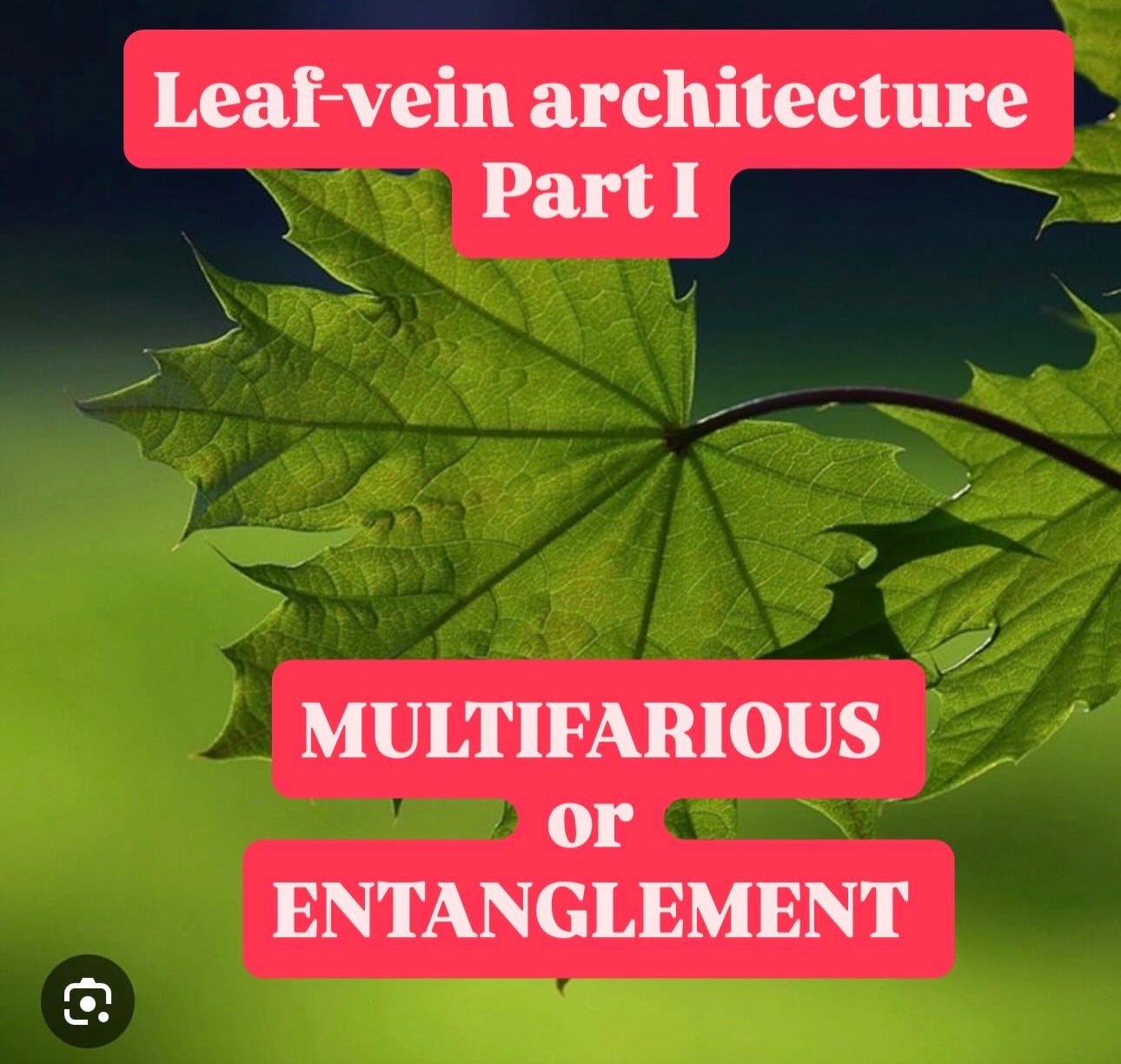
Leaf-vein architecture refers to the arrangement and hierarchical structure of a leaf’s veins. For example, the leaf in our picture illustrates a branching net-like pattern known as reticulate venation.
Leaf-vein architecture is an AP Biology concept that has generated at least two difficult SAT vocabulary in context questions. Both questions have sparked vigorous debates among confused students. Let’s take a look at the MULTIFARIOUS or ENTANGLEMENT debate.
The prefix multi clearly indicates that MULTIFARIOUS means to have many different parts or aspects. In contrast, ENTANGLEMENT means to become twisted together. For example, a fish can become ENTANGLED in a net. ENTANGLEMENT thus implies becoming involved or ENTANGLED in a difficult or complex circumstance.
The passage asks students to read a complex discussion of the causes and benefits trees derive from different types of leaf-vein architecture. This academic discussion confused many students who concluded that the complicated passage must support ENTANGLEMENT as the best answer.
It is important to avoid being distracted or confused by a passage’s overall structure. Instead, always look for a key phrase that will inevitably lead you to the correct answer. Unfortunately, many students overlooked the passage’s key concluding phrase “range of adaptions in different lineages.” The key words “range” and “different” support MULTIFARIOUS as the most logical and concise answer.
MULTIFARIOUS – having many different types, parts, or aspects
ENTANGLEMENT – involved in difficult or complicated circumstances from which it is hard to escape