


The first day at a new job is always exciting and even a bit frightening. This was especially true for 28-year-old Lillian Hatcher as she began her job as a riveter at the vast Willow Run aircraft factory outside Detroit. She later remembered, “I had never seen anything so large in my life. It was a city under one roof. When I walked in the noise was deafening. The riveting hammers sounded like machine guns.
The scale of the Willow Run assembly line overwhelmed everyone. Over 60 football fields could fit into the 3.5 million-square foot room. Built to mass produce B-24 Liberator bombers, the assembly line stretched for over one mile.
The arsenal of democracy needed women
President Roosevelt promised America’s allies that the United States would become the “arsenal of democracy.” Following the Japanese attack on Pearl Harbor, America’s mighty industries roared to life producing weapons to fight the Axis powers.
Approximately 16 million Americans served in the U.S. Armed Forces during World War II. This massive mobilization represented 12 percent of the U.S. population. Munition factories like Willow Run urgently called upon women to take the place of men fighting overseas.
Rosie the Riveter to the rescue
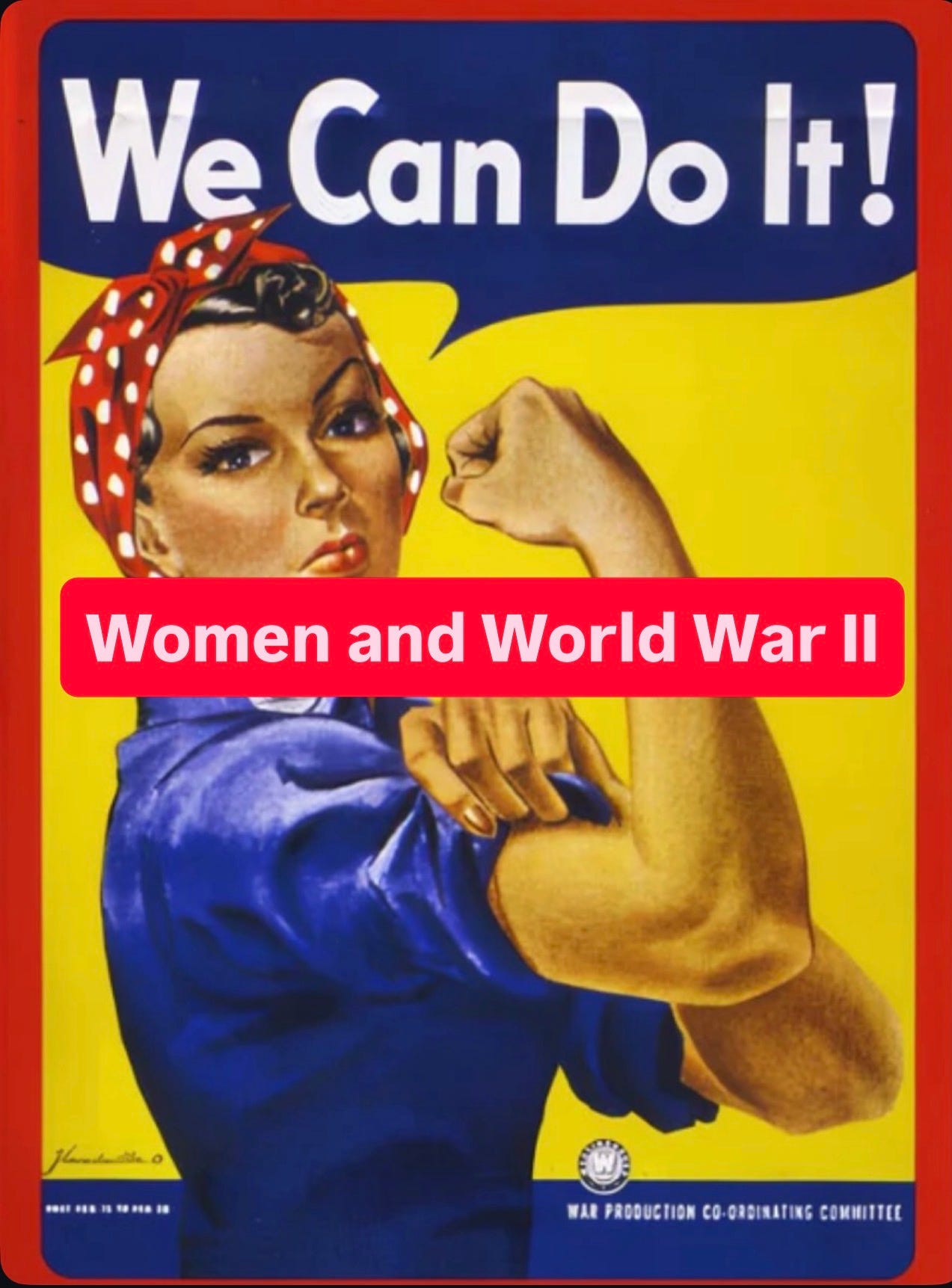
World War II created an unprecedented opportunity for American women to fill jobs vacated by men drafted into the armed forces. The iconic “Rose the Riveter” poster featured a woman named Rose Will Monroe who worked on the Willow Run assembly line.
The marketing campaign worked. More than 5 million women entered the labor force. Like Lillian Hatcher, one -third of these women took jobs in previously all-male defense plants.
Pride in mastering “men’s work”
Before World War II, America’s female workforce consisted primarily of young single women performing “pink collar” jobs such as teaching, nursing, and supporting office clerical operations. The women who worked in defense plants didn’t just build Liberator bombers, Sherman tanks, and Liberty ships; they also challenged traditional assumptions about what comprised “women’s work.”
The new female workers proved they could perform “men’s work.” They surprised their foremen by successfully operating giant overhead cranes, joining the links in a tank, and cleaning blast furnaces. Women enjoyed their independence and took pride in contributing to the war effort. “We were good at what we did,” recalled one shipyard worker. “There was a special feeling, I think, among the women, that we were part of this wonderful effort of building a ship.”
Working in defense industries also meant earning higher wages. For example, a female shipbuilder in Mobile, Alabama could earn $37.00 a week. The same worker would earn $21.00 as a salesclerk and just $14.00 as a waitress. The experience of earning wages, learning valuable new skills, and contributing to the war effort created a feeling one wartime female worker enthusiastically called, “a taste of freedom.”
Foreshadowing the future
World War II did not alter the widespread belief that women defense workers were performing a temporary role. When the atomic bomb abruptly ended the war, many women lost their jobs to returning male veterans.
The “taste of freedom” earned in World War II would not be forgotten. The war served as a vehicle for accelerating the ongoing process of increasing the female participation in the labor force. World War II thus foreshadowed the dramatic expansion of women’s workforce participation that accompanied the second wave of feminism in the 1960s and 1970s.
So why should you remember Women and World War II? This is one of the most frequently tested topics on the APUSH exam. It has generated one SAQ, four sets of multiple-choice questions, and been a part of 3 DBQs! These questions focus on two key trends: First, World War II promoted enhanced opportunities for women by opening jobs previously held by men. And second, the wartime jobs challenged traditional assumptions about the proper roles for women in American society.